Guides · Mount Dora, Florida
How Mount Dora's Resort Industry Built the Town
Mount Dora’s real industry was never oranges or tourism per se. It was the manufactured idea of itself as a hilltop winter resort. That brand still shapes its economy and demographics today.
Why Mount Dora's Plateau Made It a Resort Town
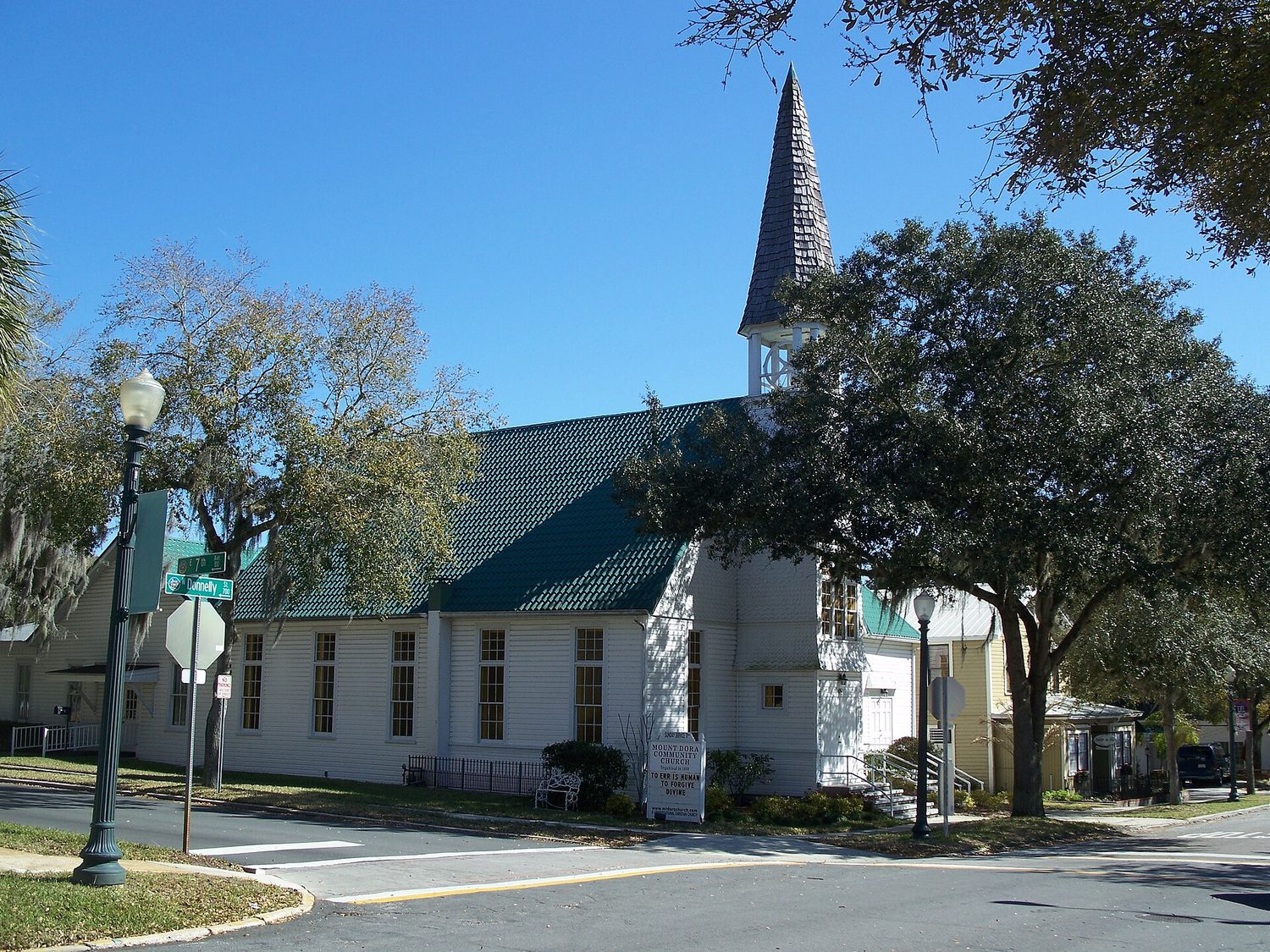
Florida is flat. Not figuratively—geologically, cartographically, existentially flat. And yet here is Mount Dora, perched on a plateau 184 feet above sea level. High enough that the town’s very name is a topographical joke that happens to be true. The "Mount" is literal, a rare rise in a state that otherwise offers elevation changes measured in inches. Surveyors named Lake Dora in 1846 after Dora Ann Drawdy, an early settler, and in 1883 the town took its name from the lake. David Simpson and his family settled here in 1874; Ross C. Tremain became the first postmaster in 1880; the town was chartered in 1910. But the plateau was the original selling point. A natural anomaly that made the place stand out before anyone had built a single hotel.
The hill wasn't just a curiosity. It was a pitch. In a state where the highest point is barely worth the climb, Mount Dora offered something no competitor could: a view, a breeze, a sense of altitude that suggested health, refinement, and escape. The surveyors who named the lake probably didn't imagine the tourism brochure. The plateau made one inevitable.
How Mount Dora Was Sold as a Winter Resort
The Alexander House opened as a hotel in 1883, the same year the town took its name from the lake. That timing is not a coincidence—it's a business plan. Mount Dora was sold as a winter resort from the very first day, before there was much of a town to resort in. The hotel later became the Lakeside Inn, listed on the National Register of Historic Places in 1975. It anchored an economy that never bothered with a second act.
The town's charter in 1910 didn't change the pitch; it formalized it. Mount Dora wasn't built on citrus or cattle or timber. It was built on the idea that wealthy Northerners would pay to spend winter somewhere that wasn't flat, wasn't cold, and wasn't like home. The Alexander House was the first brick in that brand. The town has been adding bricks ever since, each one a variation on the same theme: come see the hill.
Why Mount Dora Has a Decorative Lighthouse
Why does an inland town have a lighthouse? The honest answer is that it doesn't need one. The 35-foot lighthouse at Grantham Point, dedicated on 25 March 1988, is the only inland freshwater lighthouse in Florida—a distinction that sounds impressive until you consider that Florida has no other inland freshwater lighthouses to compete with. It exists because Mount Dora decided it should exist. A monument to the town's ongoing self-invention.
The lighthouse is not a working navigational aid. It's a symbol, a photo opportunity, a way of telling visitors that this place is special enough to have landmarks that make no practical sense. It's the same impulse that named a modest elevation a "mount" and turned a lakeside boarding house into a historic resort. Mount Dora doesn't wait for reality to supply its attractions; it builds them, then markets the story.
How Festivals Keep Mount Dora's Tourism Economy Alive
The resort era never ended; it just changed uniforms. The Mount Dora Arts Festival, held on the first full weekend of February, draws hundreds of national artists showing painting, sculpture and photography through the downtown streets. The Mount Dora Craft Fair fills downtown for a weekend each October with more than 350 exhibitors; Sunshine Artist magazine named it the number one all-time favourite classic and contemporary craft festival in America in its 50th anniversary edition. These events are not cultural garnish—they are the economic engine.
The festivals monetize the same asset the Alexander House monetized in 1883: the town itself. Visitors come for the weekend, buy things, eat things, and leave. The downtown streets become the resort, the artists become the attraction, and the hill remains the backdrop. It is a tourism economy in festival drag. It works because it always has.
Mount Dora's Demographics: Who Lives There Now
The census data reveals the demographic reality behind the tourist facade. Mount Dora has 8,121 total housing units, but 992 of them are vacant—a vacancy rate that suggests homes are not always homes. Some 500 units are held for seasonal or recreational use, a small but telling slice of the housing stock dedicated to people who don't live there year-round. The median age is 48.8 years, and 37.5 percent of residents hold a bachelor's degree or higher. The median household income is $69,931, with a median home value of $316,100 and a median gross rent of $1,500. The unemployment rate sits at 5.1 percent.
What does this add up to? A town that is older, more educated, and more affluent than the surrounding region, with a meaningful number of homes that are second homes. The people who live in Mount Dora year-round are not the tourists, but they benefit from them. The festivals bring the dollars; the seasonal residents bring the property values; the vacancy rate is the price of being a postcard. The town has always sold itself as a place to visit—and the census suggests many people have taken that literally.
Mount Dora’s Resort Economy by the Numbers
| Indicator | Figure |
|---|---|
| Total housing units | 8,121 units |
| Homes held for seasonal or recreational use | 500 units |
| Vacant housing units | 992 units |
| Median home value | $316,100 |
| Median gross rent | $1,500 |
| Median household income | $69,931 |
| Population | 16,812 people |
| Median age | 48.8 years |
| Bachelor's degree or higher | 37.5 percent |
| Unemployment rate | 5.1 percent |
The industry that built Mount Dora was never oranges or even tourism per se. It was the manufacture of a place that could sell itself, from a plateau that shouldn't be there to a lighthouse that doesn't work. The town has been in the branding business since 1883. Business is good.
Common questions
- Why is Mount Dora called a mount if Florida is flat?
- The town sits on a plateau 184 feet above sea level, which is unusually high for Florida. Surveyors named Lake Dora in 1846, and the town took its name from the lake in 1883. The 'mount' is literal, not a metaphor.
- Is the Mount Dora lighthouse real or just decorative?
- It is real, though small. The 35-foot lighthouse at Grantham Point, dedicated on 25 March 1988, is the only inland freshwater lighthouse in Florida. It was built to mark the town's identity, not for coastal navigation.
- When was Mount Dora founded and who settled it first?
- David Simpson and his family settled here in 1874. Ross C. Tremain became the first postmaster in 1880, and the town was chartered in 1910. The area was marketed as a winter resort from the start, with the Alexander House hotel opening in 1883.
- What is the oldest hotel in Mount Dora?
- The Lakeside Inn, which opened in 1883 as the two-storey Alexander House. It was listed on the National Register of Historic Places in 1975. It remains a landmark, though you should check current operations separately.
- What big events happen in Mount Dora each year?
- The Mount Dora Arts Festival runs the first full weekend of February, drawing hundreds of national artists for painting, sculpture, and photography. In October, the Mount Dora Craft Fair fills downtown with over 350 exhibitors, named the top classic craft festival by Sunshine Artist magazine.
- Is Mount Dora mostly retirees or families?
- The median age is 48.8 years, and 37.5 percent of residents hold a bachelor's degree or higher. Of 8,121 housing units, 500 are for seasonal or recreational use, and 992 are vacant. It skews older and well-educated, with a median household income of $69,931.
Every business named above is one we hold a listing for, and every date traces to a source on our sources page. We do not describe menus, interiors or service we have not verified. Details change — confirm before you travel.