Guides · Mount Dora, Florida
Museums and Historic Sites in Mount Dora
Mount Dora sells itself as a hill town in a state that does not do hills, and the museums here do the same trick with time. The past is stacked vertically—pioneer cabins, railroad-era storefronts, a lighthouse that has no business being inland—and you can climb it in an afternoon.
The Plateau and the People Who Named It
Surveyors named Lake Dora in 1846 after Dora Ann Drawdy, an early settler. The town took its name from the lake in 1883. That is the official line, and it skips the part where the town sits 184 feet above sea level, a fact the state seems to have missed. David Simpson and his family settled here in 1874. Ross C. Tremain became the first postmaster in 1880. The town was chartered in 1910. By then, the place was already a winter resort—the Alexander House opened as a hotel in 1883, and the pitch was simple: come north, but not too far north.
The Mount Dora Historic District is the easiest way to walk that pitch. Rated 4.8 from 211 reviews, it covers the block of North Baker Street and the streets around it, which is to say it covers the part of town that looks like a movie set for a place that never quite existed. The district does not lecture you. It just lets you walk past the storefronts and the old hotel bones and imagine the train pulling in with people who had never seen a plateau in Florida.
The Museum That Is Not a House
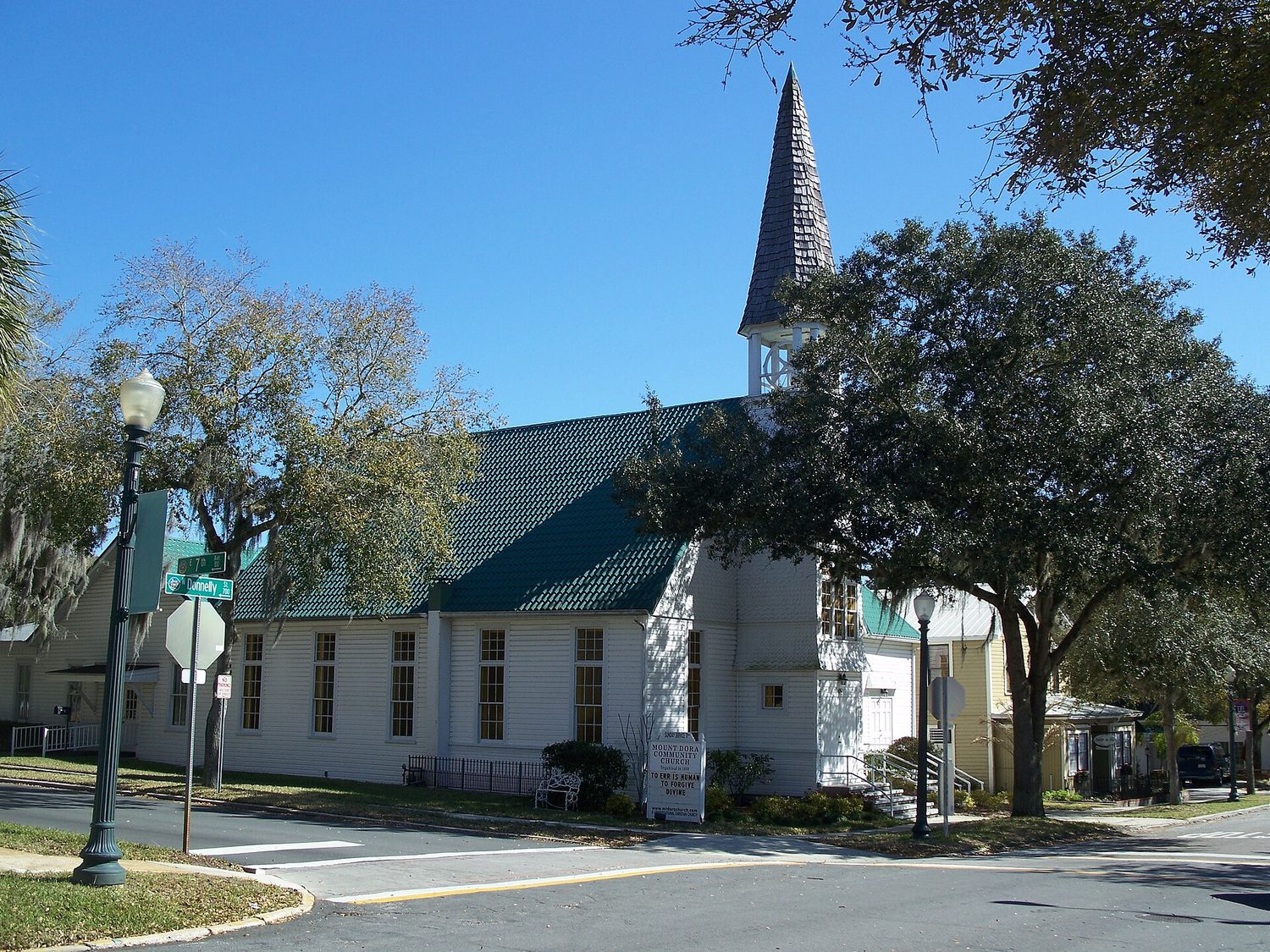
The Modernism Museum sits at 145 East 4th Avenue, and it is the town’s answer to anyone who thinks Mount Dora is all wicker and lace. Rated 4.7 from 147 reviews, it is a museum of mid-century design—furniture, objects, the kind of things your grandparents threw out and now sell for four figures. The building itself is a former church, which gives the whole thing a slightly irreverent air: worship the Eames chair, not the altar. It is a short walk from the historic district, and it makes a deliberate contrast. One block over, the past is preserved; here, the past is curated.
The House That Vincent Never Saw
The Van Gogh House is at 401 West Old US Highway 441, and it is not a house where Van Gogh lived. He never set foot in Florida, as far as anyone can prove. The name is a tribute, not a residence. Rated 4.8 from 57 reviews, it is a small museum dedicated to the artist’s life and work, with reproductions and interpretive displays rather than originals. It is the kind of place that rewards people who already know the story and want to see it told again, in a house that looks like it could be in Arles if Arles had a Publix down the street.
The Small One, Done Right
The Mount Dora History Museum at 450 Royellou is the town’s own archive, and it is appropriately modest. Rated 4.5 from 36 reviews, it covers the local story—the settlers, the lake, the railroad, the resort era—without pretending the town is older or grander than it is. It is the museum you visit after the big ones, when you want the names and dates that the postcards leave out. It is also the one that makes sense of the rest: why the streets curve the way they do, why the lake matters, why a town of 16,812 people has a lighthouse.
The Lighthouse That Should Not Be Here
The 35-foot lighthouse at Grantham Point was dedicated on 25 March 1988. It is the only inland freshwater lighthouse in Florida. That is the whole story, and it is enough. You can see it from the water or from the shore, and it does not need a museum building around it. It just sits there, a small absurd monument to the fact that Mount Dora wanted one, so it built one.
Nearby, the Apopka-Beauclair Lock & Dam at 16400 County Road 48 is a different kind of historic site—less picturesque, more functional. Rated 4.5 from 18 reviews, it is a working lock on the cross-Florida barge canal system, and it is the kind of place you visit because you are curious, not because it is pretty. It is history you can watch happen, which is rare in a town where most history is behind glass.
The Town Around the Museums
Mount Dora is not a museum town in the sense of a single block of institutions. It is a town that happens to have museums, and the census numbers explain why. The median age is 48.8 years. The median home value is $316,100. The median gross rent is $1,500. About 37.5 percent of residents hold a bachelor’s degree or higher. The unemployment rate is 5.1 percent, and the median household income is $69,931. Of the 8,121 housing units, 500 are held for seasonal or recreational use, and 992 sit vacant. That last number is the one to think about while you walk the historic district: this is a town built for visitors, and it has been since 1883.
The Mount Dora Arts Festival happens on the first full weekend of February, drawing hundreds of national artists who set up through the downtown streets. It is the town’s biggest annual event, and it turns the historic district into a gallery for a weekend. If you time your visit for that, you will see the museums and the festival in the same breath, which is the right way to see Mount Dora—as a place that collects things, including people, and puts them on display.
Come for the lighthouse. Stay for the lock. Leave before you start calling it charming out loud.
Every business named above is one we hold a listing for, and every date traces to a source on our sources page. We do not describe menus, interiors or service we have not verified. Details change — confirm before you travel.